Today's Headlines
- Anthropic opens a Seoul office and partners with NAVER, LG CNS, Samsung SDS, and other Korean leaders
- OpenAI says a near-autonomous AI chemist improved a challenging reaction in medicinal chemistry
- Nearly two-thirds of Americans say AI is advancing too quickly, per a Pew Research survey
This is a day when adoption and research moved forward while society's reception showed up in hard numbers.
Anthropic broadened its footing in the Korean market in one stroke, and OpenAI pushed AI deeper into the work of drug discovery. The technology side kept moving ahead.
On that same day, a US survey pointed to strong wariness about the pace of AI. The frontier of deployment and the unease of the public moved in different directions.
Today's Three Stories
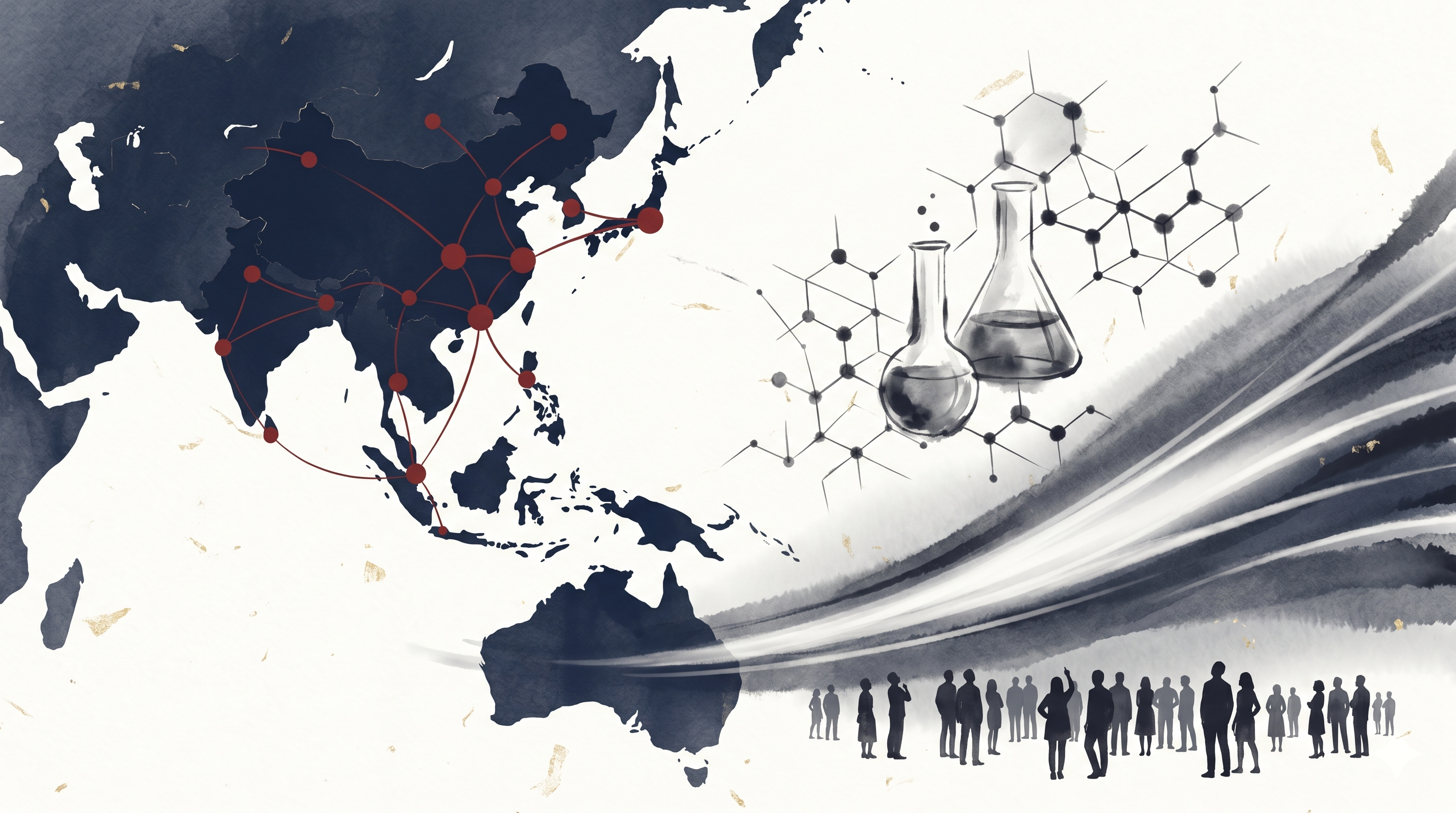
Anthropic Opens a Seoul Office — Partnering Across Korea's Leading Firms and Universities
Anthropic opened a Seoul office on June 17, 2026, and announced partnerships spanning the entire Korean AI ecosystem.
The rollout cuts across large enterprises, startups, and research institutions. On the enterprise side, NAVER deployed Claude Code across its entire engineering organization, while LG CNS and Samsung SDS are each rolling out Claude to thousands of employees.
For startups, Channel Corp integrated Claude into Channel Talk, a customer-engagement tool it provides to more than 230,000 companies, and Claude for Startups launched in Korea. The intent is to widen adoption beyond the majors to fast-growing companies.
Research and nonprofit partnerships are advancing as well. NAIRL, a consortium of national AI research labs that includes KAIST, Korea University, Yonsei University, and POSTECH, secured Claude access for up to 60 people. By casting a net across enterprises, startups, and research simultaneously, the moves aim at full-scale adoption in the Korean market.
OpenAI Says a Near-Autonomous AI Chemist Improved a Challenging Medicinal Chemistry Reaction
OpenAI announced that a near-autonomous AI chemist improved a difficult reaction in medicinal chemistry.
Drug discovery and chemical synthesis are domains of heavy trial and error, demanding both labor and time. The notable point here is that AI stepped in largely on its own and improved the conditions of a challenging reaction.
On the same day, OpenAI also introduced LifeSciBench, a benchmark for measuring AI performance in the life sciences. By advancing both a demonstration of capability and the criteria to evaluate it, the company appears focused on standard-setting for medical and pharmaceutical AI.
Source: A near-autonomous AI chemist improves a challenging reaction in medicinal chemistry (OpenAI News) / Introducing LifeSciBench (OpenAI News)
Nearly Two-Thirds of Americans Say AI Is Advancing Too Quickly
A Pew Research survey found that nearly two-thirds of Americans feel AI is advancing too quickly.
A double distrust sits behind that unease. Sixty-seven percent doubt that meaningful government regulation will materialize, and 59% do not trust companies to develop AI safely. Distrust of both the rule-makers and the builders overlaps with wariness about the pace.
Related coverage of the same research found that only 16% expect AI's societal impact over the next 20 years to be positive, while roughly 40% anticipate negative outcomes. Among those under 30 the positive share is even lower, at 14%, pointing to caution across generations.
The survey also describes actual usage. Among AI chatbots, ChatGPT leads at 44% of US adults, followed by Gemini at 24% and Copilot at 17%. At the same time, about 75% of those 65 and older do not use chatbots at all — a gap between the reach of adoption and the public's unease, now borne out in the figures.
Source: Two-thirds of Americans think AI is advancing too quickly (The Verge) / Only 16 percent of Americans think AI will have a positive impact on society (TechCrunch)
More From Today
Models
- Google unveiled the Google Home Speaker, a Gemini-powered smart speaker priced at $99.99 and shipping June 25, 2026. It handles multi-command requests, mid-sentence corrections, and contextual follow-ups, moving away from rigid voice-command structures. Ars Technica notes preorders have opened, while TechCrunch frames it as Google's return to a standalone speaker since the 2020 Nest Audio (Google Blog)
- OpenRouter pit 11 models against each other across 30 matches of a 2D battle royale. Grok 4.1 Fast came out on top with 13 wins at the lowest cost per win, while Claude Sonnet's preference for cooperation lowered its win rate — an example of an "alignment tax," where safety-oriented training becomes a cost burden in adversarial settings. GPT 5.4 led on kills but secured only two wins, showing that eliminations and victories measure distinct abilities (OpenRouter)
- Adam (CADAM), an open-source AI CAD tool from Y Combinator's W25 batch, has launched. The browser-based tool generates 3D models from natural language or reference images, uses the Claude API as its main engine, and runs OpenSCAD compiled to WebAssembly. It exports STL, SCAD, and DXF, and has drawn more than 4,200 GitHub stars under a GPLv3 license (GitHub)
Research
- Google's medical AI, AMIE, matched 21 primary care physicians in management reasoning for the ongoing care of chronic conditions, in research published in Nature. In a blinded comparison with patient actors, it scored significantly higher than physicians on plan preciseness and adherence to clinical guidelines. Built from a conversational agent and a reasoning agent, the system is being considered for real-world clinical deployment (Google Blog)
Products
- Meta and TikTok are advancing tools that let users themselves control recommendation algorithms. Threads launched "Your Algo" on June 16, 2026, allowing topic preferences to be tuned over a set window, while Instagram surfaces and lets users adjust the topics shaping their feeds. TikTok can auto-detect synonyms with an LLM and filter them — shifting algorithmic transparency from a platform privilege to a user setting (TechCrunch)
Policy
- An export control directive issued by the US government on June 12, 2026, forced Anthropic to disable Fable 5 and Mythos 5 worldwide. The two models were pulled just three days after launch, with the government citing the existence of a jailbreak method. Anthropic counters that a comparable capability level already exists in rival models including GPT-5.5, and warns that applying the same standard across the industry would effectively halt deployment of any new frontier model (The Verge)
- In response to that directive, AI sovereignty rose onto the agenda at the G7 summit. French President Macron warned that a situation in which the US could cut access overnight is a matter of economic and national security, and Indian Prime Minister Modi argued for stable access to protect the critical infrastructure of democracies. Leaders discussed a "trusted partners" scheme to grant priority access to non-US governments and companies, conditioned on maintaining competitiveness against China (TechCrunch)
Business
- NEA partner Tiffany Luck argued that enterprise AI spending has reached a turning point. Under a "tokenmaxxing" push to extract the most from AI, spending ballooned, with some companies exhausting annual budgets within months. Enterprises are now turning toward measuring return on investment, moving away from dependence on a single provider toward running multiple models in parallel (TechCrunch)
- Odyssey, a world-model maker, closed a Series B at a $1.45 billion valuation. The $310 million round was led by Natural Capital, with participation from Amazon, AMD Ventures, and GV. The company builds models that simulate physical environments for video games and robotics, and signed a strategic partnership naming AWS as its preferred cloud (TechCrunch)
- Roelof Botha, former managing partner of Sequoia Capital, joined SpaceX's board of directors. The appointment came just after the company's IPO, filling a vacancy with someone versed in public-company governance. Botha is reported to have a roughly 25-year relationship with Elon Musk (TechCrunch)
- Snap announced Specs, AR glasses priced at about $2,200, and its stock fell more than 5%. The steep price is out of reach for the teenage users at the core of Snap's base, and investor skepticism about commercial viability has spread (TechCrunch)
Other
- Adoption of Gemini and NotebookLM is accelerating across US universities. Virginia Tech, UC Irvine, and UC Riverside cleared IT-department review to approve use with sensitive data, and Indiana University opened a generative-AI introductory course to the public, among other moves building the groundwork for AI talent development at higher-education institutions. Google's enterprise-grade data protection, offered as a condition of use, has helped universities adopt the tools (Google Blog)
- The UK government deployed Extract, an AI tool that automates the processing of planning-review documents, across all English councils, with each projected to save roughly 255 hours of manual work. A further prototype, the Augmented Planning Decisions tool, is in alpha testing and is slated to expand to more than 300 local authorities by 2027 (Google Blog)
- NVIDIA's GEAR Lab, CMU, and UC Berkeley introduced ENPIRE, a framework in which AI coding agents autonomously run learning experiments on real robots. The system achieved 99% success on the precision tasks of inserting a GPU card and fastening a zip tie, demonstrating that AI can replace the human-in-the-loop cycle of data collection and evaluation (Ars Technica)
- Greptile integrated TREX, an execution layer, into its AI code reviewer. During a pull-request review it spins up sandboxed, disposable instances to run the code and catch runtime bugs that static analysis misses. By leaving artifacts such as screenshots, logs, and videos, it may lower the cost of verification for development and QA teams (Greptile)
- PC Watch columnist Kazuhisa Nishikawa describes trying OpenClaw, an autonomous agent framework, in search of the continuous, self-directed tasks that a standalone LLM struggles to deliver. He built an end-to-end pipeline from image and video generation to automated social-media posting, noting that a design which never makes the user aware that tools are being called sets it apart from existing AI chat (PC Watch)
Source: Selected by the editors from the AI news inbox (collected June 18, 2026 — 30 items, 7 primary and 23 secondary).